

A camera module that looks correct on a bench can still create expensive failures after a product enters production. Focus drift, inconsistent color response, connector fit issues, firmware changes, or sensor allocation problems often appear only when hundreds or thousands of units are moving through a manufacturing line. That is why knowing how to validate camera module suppliers is not simply a procurement exercise. It is a technical qualification process that protects your launch schedule, field reliability, and product margin.
For OEMs, system integrators, and engineering teams building medical devices, robotics platforms, industrial equipment, smart security products, or embedded systems, the right supplier must prove more than catalog availability. They need to demonstrate imaging competence, process control, customization discipline, and the capacity to support your product beyond the first prototype.
Start With the Application, Not the Datasheet
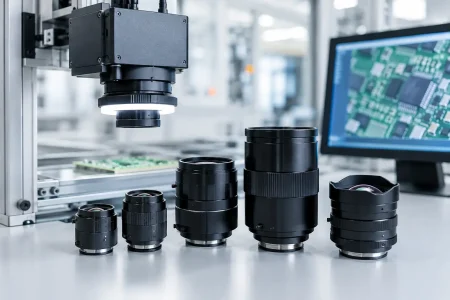
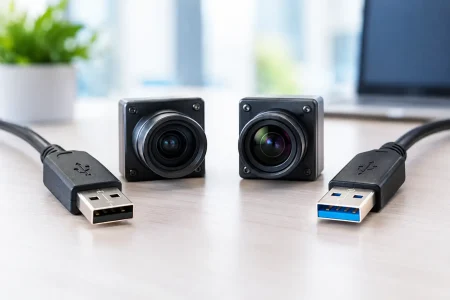
A datasheet is necessary, but it is not a complete validation tool. Two modules with the same sensor resolution and MIPI CSI-2 interface can perform very differently in a real device. Lens selection, optical alignment, image signal processor tuning, FPC design, shielding, module housing, and assembly tolerances all affect the final image.
Define the operating conditions before contacting suppliers. Specify the working distance, field of view, illumination type, target frame rate, low-light requirements, power budget, interface, mechanical envelope, and environmental conditions. For industrial inspection, you may prioritize motion performance, distortion control, and repeatable color measurement. For a medical or endoscope application, module diameter, thermal behavior, illumination integration, and image consistency may carry more weight than maximum resolution.
This requirement set gives suppliers a meaningful technical target. It also makes it easier to identify whether a supplier is proposing a fit-for-purpose module or simply redirecting you to its nearest standard part.
How to Validate Camera Module Suppliers Beyond Samples
A functional sample is the beginning of qualification, not the finish line. Request enough information to understand how the sample was designed, built, tested, and controlled. A supplier that can explain trade-offs clearly is generally more valuable than one that promises every specification without discussing limitations.
Review engineering depth and customization ownership
Ask who owns the optical, mechanical, electronic, and firmware work. Some vendors are effective distributors or module assemblers, but may rely on outside engineering for lens matching, ISP tuning, FPC layout, or specialized integration. That model can work for a stable off-the-shelf requirement. It becomes risky when your project needs a compact form factor, custom cable length, specific sensor orientation, special connector, low-light tuning, or a redesigned module for a demanding enclosure.
A capable engineering partner should be able to discuss sensor and lens compatibility, chief ray angle considerations, focus tolerance, MTF targets, image artifacts, interface timing, electromagnetic interference, and thermal effects. They should also explain the expected development path from concept to sample to pilot build and mass production.
Ask for a clear change process. If a lens, sensor revision, driver component, or FPC material changes, how will the supplier evaluate the impact and notify your team? Component substitutions without formal approval can alter image quality or create software compatibility problems after your design has been validated.
Test image quality under real operating conditions
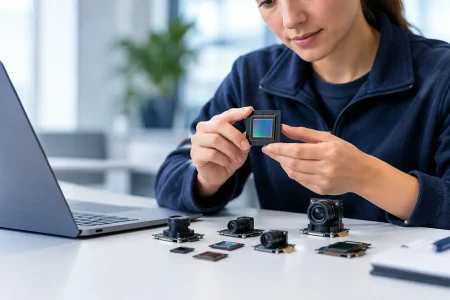
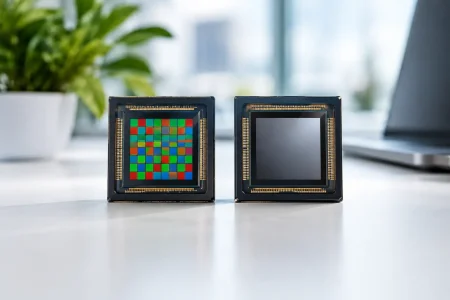
Do not approve a camera module based only on a single reference image. Test samples in the enclosure, lighting, and software environment that reflect your final product. Measure the characteristics that matter to the application: sharpness across the field, focus position, distortion, color accuracy, signal-to-noise ratio, low-light response, frame stability, rolling shutter artifacts, and dead-pixel behavior.
For machine vision and inspection products, compare multiple modules rather than a single golden sample. Unit-to-unit variation matters. A module with excellent center sharpness but weak corner performance may be acceptable for barcode reading, yet unsuitable for edge inspection or a wide-angle navigation camera. Likewise, aggressive image enhancement may look attractive to the human eye while reducing repeatability for computer vision algorithms.
Require the supplier to state its inspection method and acceptance criteria. Visual checks alone are insufficient for many projects. You need to know whether the production process verifies focus, sensor contamination, image output, electrical function, and mechanical dimensions, and whether those records can be traced to the production lot.
Verify manufacturing controls and traceability
Camera modules are precision assemblies. Sensor placement, lens alignment, adhesive curing, dust control, soldering quality, and FPC handling all influence yield and long-term performance. Ask to review the supplier’s manufacturing environment, either through an on-site audit or a detailed remote assessment supported by process documentation and factory evidence.
Key questions include whether assembly is performed in a controlled cleanroom environment, how optical components are protected from contamination, how focus is set and locked, and how finished modules are inspected before packing. For products used in medical, security, or industrial deployments, traceability should extend to material batches, production date, inspection results, and shipment lots.
There is no universal production standard that fits every program. A consumer accessory may need efficient sampling and basic lot control, while an industrial camera in a 24/7 automation system may require stronger incoming inspection, extended reliability testing, and documented change notifications. Match the qualification depth to the cost of a field failure.
Confirm Capacity Without Confusing It With Capability
A supplier can have a large factory and still be a poor fit for your project if it lacks the correct process, equipment, or component strategy. Conversely, a technically strong development team may struggle to support a rapid ramp if its supply chain and quality systems are not prepared.
Ask for realistic information on monthly capacity for the relevant module type, typical lead times for samples and production, and the production volumes already committed to other programs. Confirm whether tooling, test fixtures, and optical alignment equipment can be dedicated or scaled for your project. It is also useful to understand the supplier’s plan for sensor availability. Popular sensors can face allocation constraints, end-of-life notices, or long lead times.
The strongest suppliers separate prototype speed from production discipline. Fast samples are valuable, but a rushed engineering sample should not be treated as proof of mass-production consistency. Request a pilot run before final approval. A pilot build exposes problems in assembly yield, test time, packaging, process repeatability, and quality documentation that a small sample batch may hide.
Evaluate Communication as a Manufacturing Control
Supplier responsiveness is not a soft criterion. It affects engineering change control, root-cause analysis, and recovery time when issues occur. During evaluation, observe how the supplier handles technical questions. Do they provide exact answers, test data, and a responsible owner, or do responses remain general and sales-led?
A good supplier will challenge incomplete requirements early. They may explain that a requested field of view conflicts with the desired module height, that a high frame rate increases thermal load, or that a specific lens configuration will not maintain focus across the required temperature range. This is useful engineering communication, not resistance.
Establish expectations for sample reports, corrective action reports, revision control, and escalation paths before issuing a production purchase order. Teams in the United States and other international markets should also confirm working-hour overlap, documentation language, shipping terms, and support ownership. A technically capable partner becomes far more dependable when communication is structured from the first project stage.
Use a Qualification Scorecard Before Selecting a Supplier
A formal scorecard keeps price from overwhelming the factors that determine total project cost. Score suppliers against technical fit, image quality, customization capability, manufacturing controls, traceability, capacity, supply continuity, responsiveness, lead time, and commercial terms. Weight each category according to your application.
For example, a low-volume diagnostic device may place its highest weight on image consistency, documentation, and controlled changes. A smart hardware brand preparing for a major launch may weight production scalability, sample turnaround, and sensor supply continuity more heavily. Price should remain part of the decision, but the lowest unit cost can quickly disappear when a supplier causes redesign work, missed milestones, or field returns.
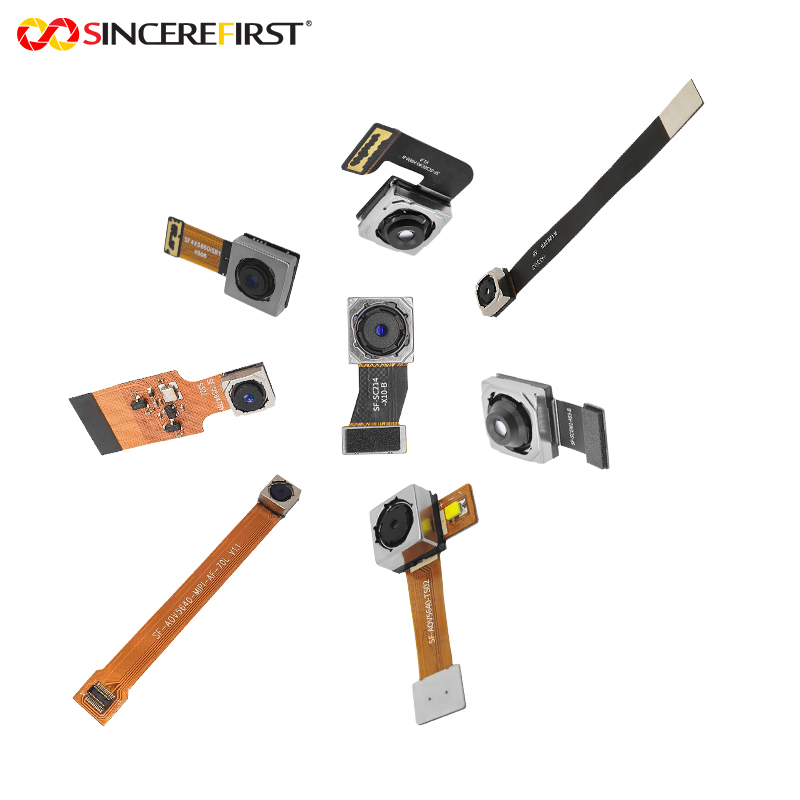
SincereFirst supports this qualification approach by combining standard camera module supply with custom optical and embedded imaging development, backed by controlled manufacturing and scalable production capability. The practical value is not simply access to more module options. It is the ability to move from an application requirement to a production-ready imaging solution with clear technical accountability.
Before committing to a supplier, run one final test: ask how they would handle a failure found after pilot production. Their answer should cover containment, root-cause analysis, corrective action, replacement support, and prevention of recurrence. The supplier you want is not the one that claims problems never happen. It is the one with the engineering discipline to identify them quickly, communicate honestly, and keep your product moving forward.